Universities & Colleges in Nebraska

Nebraska's higher education landscape is rich, diverse, and nationally recognized — from flagship research universities to elite private colleges. Whether you're a prospective student, a visiting academic, or a traveler curious about campus life, Nebraska's universities have much to offer.

Nebraska's Higher Education Landscape

Nebraska is home to a remarkable collection of public and private institutions that collectively enroll over 120,000 students and contribute billions of dollars to the state's economy annually.

Nebraska's higher education story begins with the land-grant ideal — the vision, articulated in the 1862 Morrill Act, that public universities should serve the agricultural and technical needs of the people while also advancing the liberal arts. The University of Nebraska, founded in 1869 just two years after statehood, was Nebraska's answer to that challenge, and it has been answering that challenge ever since with remarkable success.

Today, the University of Nebraska system encompasses four campuses — Lincoln, Omaha, Kearney, and the Medical Center in Omaha — and together they form the academic backbone of the state. The system's flagship campus in Lincoln is a Carnegie R1 research institution, meaning it is among the nation's very highest research universities, with over $500 million in annual research expenditures and academic programs that attract students, faculty, and collaborators from every corner of the world.

Alongside the public university system, Nebraska's private colleges and universities constitute a equally impressive educational landscape. Creighton University in Omaha is a distinguished Jesuit institution with nationally ranked programs in medicine, pharmacy, dentistry, law, and business. Nebraska Wesleyan University in Lincoln and Hastings College in Hastings offer excellent liberal arts education in the traditions of Methodist and Presbyterian scholarship respectively.

Nebraska's community college system — with institutions in every region of the state — provides critical workforce training and transfer pathways that make higher education accessible to students at every stage of life and from every economic background. Metropolitan Community College in Omaha, Southeast Community College in Lincoln, and Central Community College in Grand Island collectively serve tens of thousands of students annually with programs in healthcare, technology, business, agriculture, and the trades.

The state's commitment to higher education is also reflected in its funding model. Despite Nebraska's relatively small population, the state consistently ranks above the national average in per-capita higher education spending, recognizing that an educated workforce is essential to long-term economic competitiveness. This investment shows in outcomes: Nebraska's college graduation rates, workforce retention, and educational attainment metrics all rank favorably against national benchmarks.

📊 Nebraska Higher Education at a Glance

Nebraska's 26 colleges and universities serve over 120,000 students. The University of Nebraska system alone employs over 14,000 people and generates an estimated $2.4 billion in annual economic impact for the state.

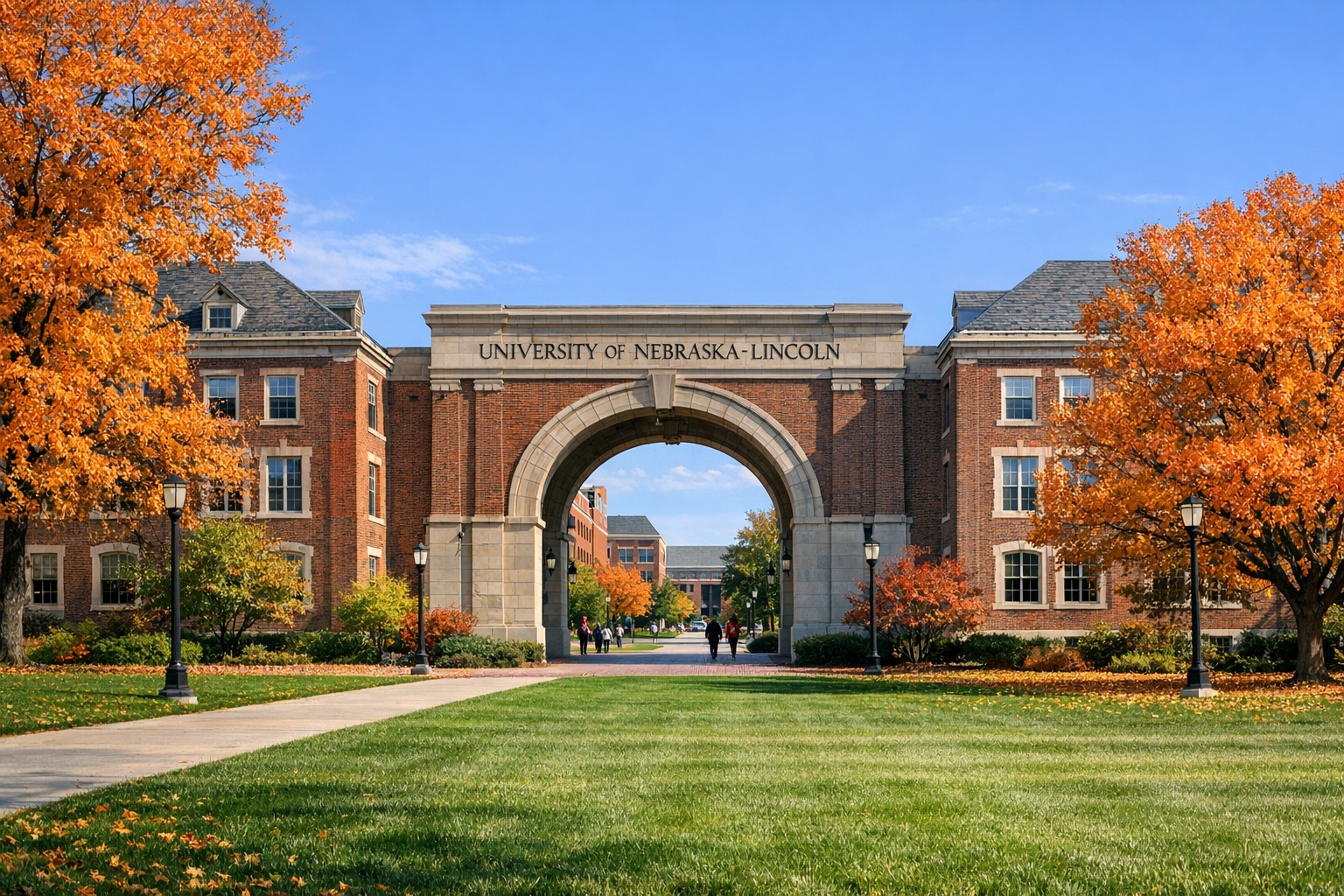
University of Nebraska Lincoln campus with red brick buildings and autumn foliage

University of Nebraska–Lincoln

The University of Nebraska–Lincoln (UNL) is Nebraska's flagship land-grant research university and one of the great public universities of the American Midwest. Founded in 1869, UNL today enrolls approximately 25,000 students from all 50 states and over 130 countries, offering more than 150 undergraduate majors and 300 graduate degree programs across 15 colleges.

UNL's academic reputation is built on genuine research excellence. The university holds Carnegie R1 classification — the highest research classification available — and its faculty and students annually produce breakthroughs in fields ranging from agricultural biotechnology to quantum computing to groundwater science. The university's Institute of Agriculture and Natural Resources is internationally recognized, and its research on drought-tolerant crops, precision agriculture, and water sustainability has direct global impact.

The Lincoln campus spreads across 557 acres of architecturally striking red-brick buildings, tree-lined walkways, and immaculately maintained green spaces. Visitors are welcome to explore the campus freely; highlights include the Sheldon Museum of Art (with a world-class collection of 20th-century American art), the Robert Hillestad Textiles Gallery, the Lied Center for the Performing Arts (home to world-class theatrical and musical performances), and the Nebraska Union's Memorial Stadium — the storied home of Husker football.

Founded1869
Enrollment~25,000
Carnegie ClassR1 – Very High Research
TypePublic Land-Grant

Academic Programs & Strengths

UNL's academic strengths are wide-ranging, but several programs consistently earn national and international recognition. The College of Engineering, one of the largest and most highly regarded in the region, offers programs in civil, mechanical, electrical, chemical, computer science, and biomedical engineering, with research centers focused on materials science, structures, and systems that attract millions of dollars in federal research funding annually.

The College of Agricultural Sciences and Natural Resources (CASNR) is arguably UNL's most distinctive academic unit — a reflection of the land-grant mission that gave the university its founding purpose. CASNR programs in agronomy, animal science, food science, horticulture, and agricultural economics draw students from farm backgrounds and non-farm backgrounds alike, united by an interest in understanding and improving the systems that feed the world. The Great Plains IGenomics Center and other affiliated research facilities at UNL are conducting genomics-based agricultural research that is shaping the future of global food production.

UNL's College of Business Administration is AACSB-accredited and offers programs in accounting, finance, marketing, supply chain management, and management information systems that are highly valued by employers throughout the region and nationally. The college's entrepreneurship programs have spawned dozens of successful startups, and its connections to Omaha's substantial financial and insurance industries create exceptional internship and placement opportunities for students.

The Hixson-Lied College of Fine and Performing Arts is another area of genuine distinction. The Johnny Carson School of Theatre and Film — named for the beloved Tonight Show host and UNL alumnus — offers nationally competitive training for aspiring actors, directors, designers, and film-makers. The Glenn Korff School of Music produces outstanding musicians and music educators, and the Lied Center's performance series brings world-class artists to Lincoln throughout the academic year.

Campus Life & Athletics

Life at UNL is shaped above all by the Cornhusker athletic tradition, and particularly by the extraordinary passion that surrounds Nebraska football. Memorial Stadium, with a capacity of 86,000, becomes the third-largest city in Nebraska on home game days — a phenomenon that has persisted for over 50 consecutive years of sellout crowds. The atmosphere at a Huskers home game is genuinely one of the most electric sporting experiences in American college athletics, and attending even a single game is an experience that visitors to Lincoln should not miss if their visit coincides with the football season.

Beyond football, UNL fields competitive programs across more than two dozen sports in the Big Ten Conference, including nationally ranked volleyball (the Nebraska women's volleyball program is one of the most decorated in NCAA history), gymnastics, wrestling, and track and field. The university's athletic facilities, centered on Memorial Stadium and the nearby Bob Devaney Sports Center, are first-class and open to visitors on non-game days.

Student life on campus is enriched by over 550 recognized student organizations, a thriving Greek life community, and a residential system that includes several living-learning communities designed to help students connect academic interests with social activities. The Nebraska Union and other student facilities offer dining, recreation, and gathering spaces that keep campus life vibrant throughout the academic year.

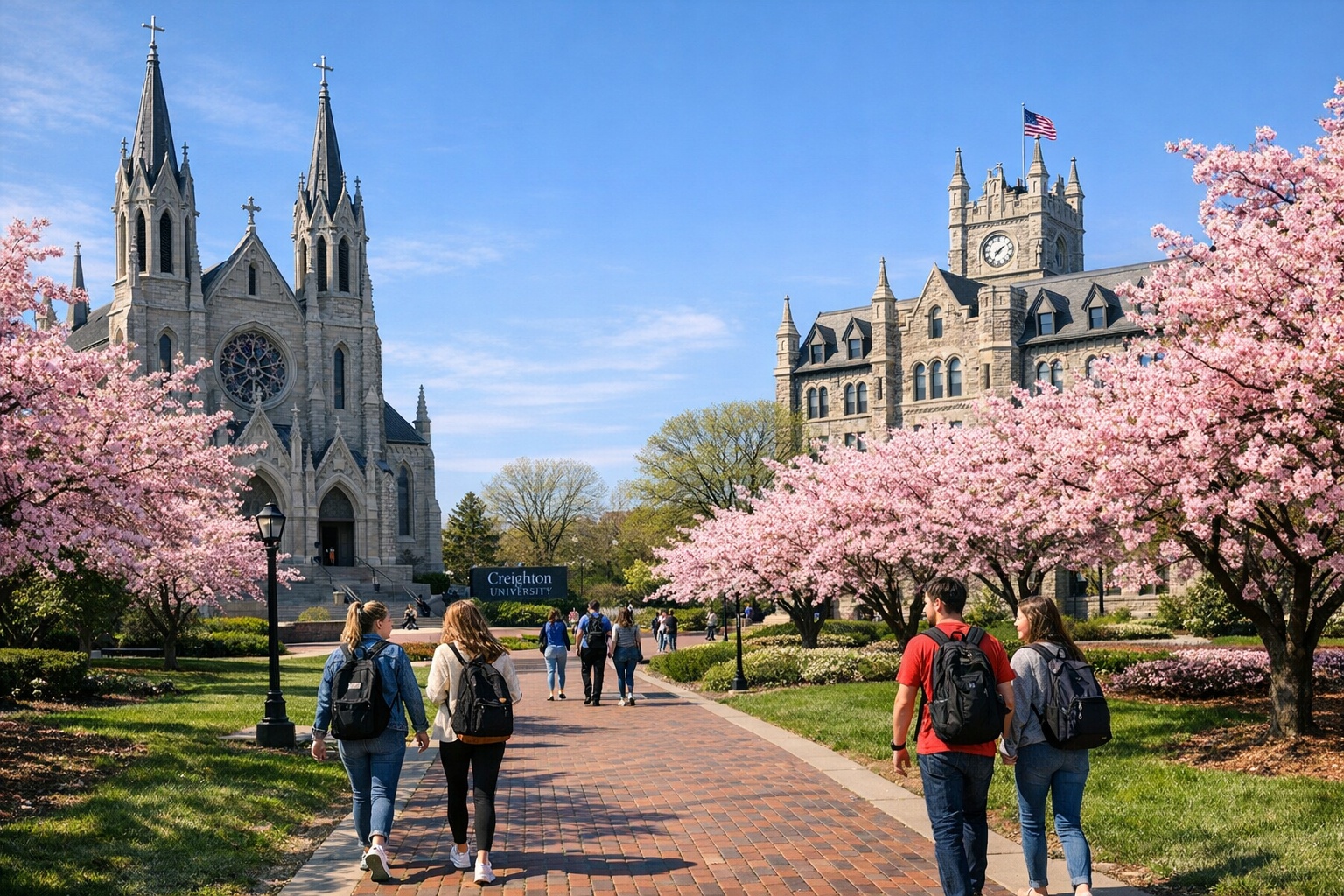
Creighton University campus in Omaha Nebraska with cherry blossom trees in spring

Creighton University

Creighton University, founded in Omaha in 1878 and operated by the Society of Jesus (Jesuits), is one of the 28 Jesuit universities in the United States and consistently ranks among the finest private universities in the Midwest. With an enrollment of approximately 8,500 students, Creighton offers an intimate educational environment that combines the resources and academic breadth of a comprehensive university with the close-knit community and mentorship culture that defines Jesuit education at its best.

The Jesuit educational tradition that shapes Creighton is fundamentally humanistic in its orientation — grounded in the belief that education should form the whole person, developing intellectual, moral, and spiritual capacities together. This means that at Creighton, even students pursuing highly technical professional programs in medicine, pharmacy, or engineering engage with a core curriculum that includes philosophy, theology, ethics, and the arts. The result is graduates who are not only technically competent in their fields but also ethically grounded and broadly educated in ways that serve them throughout their personal and professional lives.

Creighton's health sciences programs are its flagship academic offerings and among the most respected in the region. The Creighton University School of Medicine, the School of Pharmacy and Health Professions, and the School of Dentistry together form one of the most comprehensive health sciences campuses in the Midwest, producing thousands of physicians, pharmacists, dentists, and allied health professionals who serve communities throughout Nebraska and the surrounding region.

Founded1878
Enrollment~8,500
AffiliationJesuit (Society of Jesus)
TypePrivate University
Notable Programs
Medicine (MD) Pharmacy (PharmD) Dentistry (DDS) Law (JD) Business (MBA) Nursing (BSN/MSN) Liberal Arts

Campus & Location

Creighton's 139-acre campus sits in the heart of Omaha's Midtown neighborhood, just north of downtown, and its red brick buildings and tree-lined walks create a distinctly collegiate atmosphere within the urban fabric of the city. The campus has undergone significant investment in recent years, with new health sciences facilities, a renovated student center, and expanded housing options that have substantially enhanced the student experience.

The Creighton campus is easily accessible from downtown Omaha and the Old Market district, and students take full advantage of Omaha's cultural amenities — the Henry Doorly Zoo, the Joslyn Art Museum, the diverse restaurant scene, and the vibrant entertainment corridor along the Missouri River — as an extension of their collegiate experience. The integration of Creighton's campus life with Omaha's urban energy is one of the university's most appealing qualities for students who want both a genuine college community and ready access to big-city cultural resources.

The Reinert-Alumni Memorial Library and the Jesuit archives housed on campus contain significant historical collections related to the history of Jesuit education in the American West, as well as exceptional manuscript and rare book collections that are available to researchers by appointment. The stunning St. John's Church on campus, completed in 1888, is one of Omaha's finest architectural landmarks and a genuine spiritual center of the Creighton community.

Research & Service

Creighton's research enterprise is centered in its health sciences, where faculty and students conduct groundbreaking research in areas including cancer biology, cardiovascular medicine, infectious disease, dental materials, and pharmaceutical sciences. The university's clinical research programs provide cutting-edge healthcare to the Omaha community while advancing medical knowledge, and several Creighton faculty members hold national leadership positions in their academic disciplines.

Service is at the heart of the Jesuit mission, and Creighton takes this dimension of its identity seriously. The university's service-learning programs, which integrate community service into academic coursework, engage thousands of students each year in partnerships with Omaha's nonprofit and social service organizations. The Creighton University Law Clinic provides free legal services to low-income community members. The School of Medicine's community health programs extend healthcare access to underserved populations throughout the region.

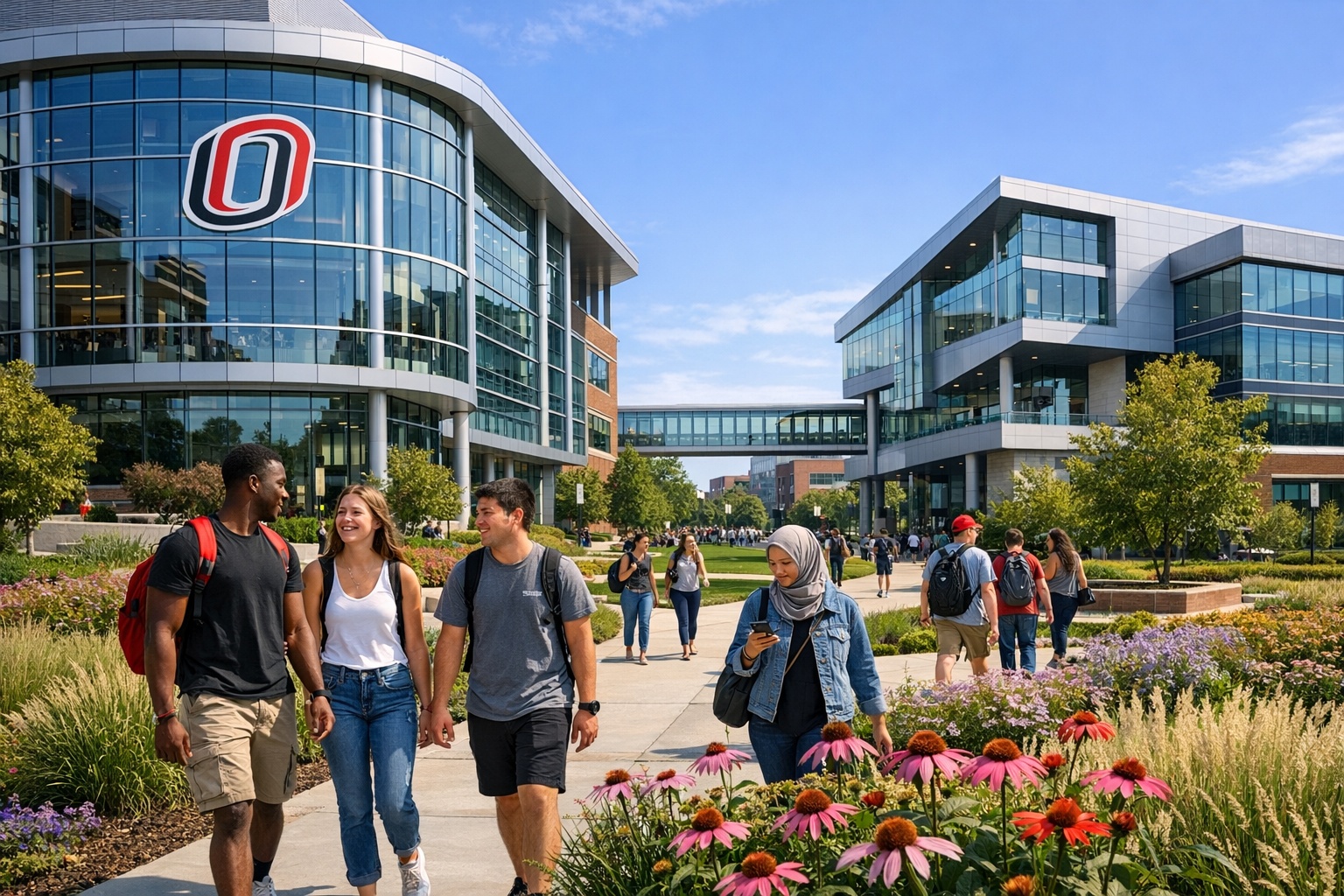
University of Nebraska Omaha modern campus with students walking between buildings

University of Nebraska Omaha

The University of Nebraska Omaha (UNO) is a dynamic metropolitan research university that serves approximately 15,000 students on its modern south Omaha campus. As part of the University of Nebraska system, UNO holds the distinctive mission of being a metropolitan university — one explicitly designed to serve the economic, cultural, and intellectual needs of the Omaha metropolitan area while also conducting nationally recognized research.

UNO's academic programs reflect Omaha's economic strengths and the needs of its diverse workforce. The College of Information Science and Technology (IS&T) is one of UNO's crown jewels, offering programs in cybersecurity, database administration, IT innovation, bioinformatics, and software engineering that produce graduates in high demand by Omaha's substantial insurance, financial services, and technology industries. The National Strategic Research Institute at UNO, sponsored by the Department of Defense, conducts research on cybersecurity and homeland security issues of national importance.

The College of Business Administration at UNO is AACSB-accredited and offers undergraduate and graduate programs in accounting, economics, finance, management, marketing, real estate, and supply chain management. The college's close ties to Omaha's business community create exceptional experiential learning and employment opportunities for students through internships, consulting projects, and networking events that regularly bring senior executives from Fortune 500 companies to campus.

Founded1908
Enrollment~15,000
CampusDodge & Pacific (South Omaha)
TypePublic Metropolitan
Young woman studying on a Nebraska university campus lawn with laptop and books

Student Life in Nebraska

Being a student in Nebraska offers a quality of life that genuinely surprises those who have only experienced university life in major coastal metropolitan areas. Nebraska's combination of affordable living, safe communities, strong academic resources, vibrant social scenes, and spectacular outdoor recreation creates an undergraduate and graduate experience that compares favorably with much more expensive alternatives.

Nebraska's college towns — particularly Lincoln — have undergone remarkable cultural transformations over the past two decades. Lincoln today is a genuinely cosmopolitan city for its size, with an extraordinary diversity of restaurants (including excellent Ethiopian, Vietnamese, Sudanese, Somali, Mexican, Korean, Indian, and Japanese options reflecting the city's growing international community), a thriving live music scene spanning classical to indie to hip-hop, multiple breweries and craft cocktail establishments, and an arts community that punches well above its weight.

Housing affordability is a significant quality-of-life advantage for Nebraska students. Rent in Lincoln and Omaha remains dramatically lower than in comparable college cities in coastal states, enabling students to live comfortably near campus on part-time work incomes that would barely cover half a month's rent in San Francisco or Boston. This affordability reduces student debt burdens and allows students to focus more fully on their studies and campus involvement.

  • Affordable housing — avg. 40% below coastal city rents
  • Vibrant dining and nightlife in Lincoln's Haymarket & Omaha's Old Market
  • Strong career placement — Nebraska's low unemployment supports internships
  • World-class outdoor recreation within a 2–3 hour drive
  • 500+ student organizations across Nebraska's major campuses
  • Huskers athletics provides unmatched campus-wide community spirit

More Nebraska Colleges & Universities

Beyond the flagship institutions, Nebraska is home to a rich array of colleges offering distinctive academic missions, programs, and campus experiences.

🎓 Public University

University of Nebraska Medical Center (UNMC)

📍 Omaha, Nebraska

UNMC is one of the nation's premier academic health centers, with internationally recognized research programs in cancer, infectious disease, genetics, and neuroscience. The university trains physicians, dentists, pharmacists, nurses, and allied health professionals and operates Nebraska Medicine, one of the state's largest health systems. UNMC's biocontainment research facilities are among the most advanced in the world and have played national roles in pandemic preparedness.

FocusHealth Sciences
LocationOmaha
🎓 Public University

University of Nebraska at Kearney (UNK)

📍 Kearney, Nebraska

The University of Nebraska at Kearney serves approximately 6,500 students in south-central Nebraska and is known for its strong teacher education, business, and fine arts programs. UNK's campus sits on the edge of the Platte River valley, just minutes from the world-famous crane migration viewing areas, giving students and visitors a unique connection to one of North America's great natural spectacles. The university's small class sizes and accessible faculty create a highly personalized educational experience that consistently earns strong satisfaction ratings from students.

Enrollment~6,500
SpecialtyEducation, Fine Arts
🏫 Private Liberal Arts

Nebraska Wesleyan University

📍 Lincoln, Nebraska

Nebraska Wesleyan University, affiliated with the United Methodist Church, is a highly regarded liberal arts university offering over 60 undergraduate programs across the arts, sciences, and professional fields. NWU consistently earns national recognition for its undergraduate research programs, its commitment to inclusive pedagogy, and its exceptional student-to-faculty ratio that ensures every student receives genuine individual attention. The university's programs in nursing, psychology, criminal justice, and the visual arts are particularly noteworthy. NWU graduates carry the distinction of a rigorous liberal arts credential that serves them well across diverse career paths.

Founded1887
AffiliationUnited Methodist
🏫 Private University

Bellevue University

📍 Bellevue, Nebraska

Bellevue University is Nebraska's largest private university by enrollment and has built a national reputation for making higher education accessible to working adults and military-affiliated students. Located in the city of Bellevue — home to Offutt Air Force Base and the headquarters of US Strategic Command — Bellevue University offers over 100 undergraduate and graduate programs in flexible formats designed to accommodate the schedules and needs of military personnel, veterans, and working professionals. Its programs in cybersecurity, business, information technology, and healthcare management are particularly highly regarded.

SpecialtyAdult & Military Learners
FormatOnline & Hybrid
🏫 Private Liberal Arts

Hastings College

📍 Hastings, Nebraska

Hastings College is a distinguished liberal arts college affiliated with the Presbyterian Church (USA), offering a classic residential college experience in the small city of Hastings in south-central Nebraska. With an enrollment of approximately 1,000 students, Hastings provides the intimate community, close faculty mentorship, and broad intellectual formation that define the liberal arts college ideal at its finest. The college is particularly recognized for its programs in teacher education, music (the Perkins Music Hall is home to an exceptional music program), and its strong Division III athletics program that consistently produces all-conference and all-American student-athletes.

Founded1882
Enrollment~1,000
🎓 Community College

Metropolitan Community College

📍 Omaha (Multiple Campuses)

Metropolitan Community College is one of Nebraska's largest educational institutions, serving over 25,000 students annually across six campuses in the Omaha metropolitan area. MCC offers over 100 degree and certificate programs in healthcare, information technology, business, culinary arts, manufacturing, construction, and the liberal arts transfer pathway. The college's relationships with Omaha's major employers create direct pathways from classroom to career, and its healthcare programs feed a steady stream of qualified nurses, medical assistants, and allied health professionals into the region's healthcare system. MCC's culinary arts program is particularly acclaimed, operating a student-run restaurant that has become a genuine dining destination in Omaha.

TypeCommunity College
Students25,000+

Visiting Nebraska's University Campuses

Nebraska's university campuses are among the state's most rewarding destinations for visitors with an interest in architecture, culture, and intellectual life. Both UNL and Creighton offer free self-guided walking tour maps available at their visitor centers, and both campuses have architectural landmarks that merit attention even for visitors with no academic interest in the institutions themselves.

UNL's East Campus — the original agricultural campus — is a particular treasure, with some of the most beautiful collegiate Gothic architecture in the region and a working agricultural research complex that gives the campus a unique blend of the academic and the pastoral. The UNL Dairy Store on East Campus offers some of the best ice cream in Nebraska, made by students in the food science program from milk produced by the university's own herd.

Creighton's campus is best explored during the academic year when student life fills its quadrangles and common spaces with energy. The campus is compact enough to tour in under an hour on foot, and the combination of Gothic Revival and modern architecture creates visual interest at every turn. St. John's Church, the historic administration building, and the new health sciences campus are the architectural highlights.

For prospective students and their families, all of Nebraska's major universities offer official campus tours and information sessions during the academic year and special open house events in the fall and spring. Advance registration is recommended for official tours, particularly at UNL and Creighton, where demand is high. Informal visits are always welcome at public university campuses, with most facilities open to the public during normal business hours.

Research & Innovation in Nebraska

Nebraska's universities are engines of innovation and economic development as well as centers of teaching and learning. The Nebraska Innovation Campus, located adjacent to the University of Nebraska–Lincoln, is a 235-acre research park that brings corporate research partners directly onto the university campus to collaborate with UNL faculty and students on applied research projects in agriculture, food, and health. Tenants include Cabela's, Hudl, ConAgra, and numerous biotech startups, creating a live-work research community that accelerates the translation of academic research into commercial applications.

UNMC's Buffett Cancer Center is a National Cancer Institute-designated cancer center — one of only about 70 in the country — conducting cutting-edge research on cancer prevention, detection, and treatment. The center's clinical trials provide access to the latest experimental therapies for cancer patients throughout Nebraska and the surrounding region, while its basic science laboratories pursue the molecular and genetic mechanisms of cancer development.

Nebraska's higher education research enterprise collectively generates over $700 million in externally funded research activity annually, supporting thousands of research positions, attracting top scientists and engineers from around the world, and producing the intellectual property that launches new industries and companies in the state. This research foundation is increasingly being recognized as one of Nebraska's most important economic assets — one that will grow in importance as the knowledge economy expands in the 21st century.

International Students in Nebraska

Nebraska's universities collectively host tens of thousands of international students from over 150 countries, contributing enormously to the intellectual diversity of their campuses and the cultural vitality of their host communities. UNL alone enrolls over 3,500 international students, representing one of the most internationally diverse student bodies among land-grant universities in the United States.

The international student community in Nebraska has transformed cities like Lincoln and Omaha in deeply positive ways, introducing new restaurants, cultural festivals, businesses, and perspectives that enrich the social fabric of these communities. The Omaha metropolitan area, in particular, has experienced significant demographic transformation over the past three decades, with growing communities from Sudan, Somalia, Ethiopia, Vietnam, Mexico, India, and many other countries creating one of the most unexpectedly diverse cities in the American interior.

For international students considering Nebraska for their American education, the combination of academic quality, affordable living costs, safe communities, and genuine multicultural hospitality makes the state a compelling choice. Nebraska's universities consistently rank highly in international student satisfaction surveys, and the state's growing immigrant communities ensure that students from many parts of the world will find familiar cultural touchstones alongside the adventure of an American education.
Nebraska Universities at a Glance

University Location Type Est. Enrollment Notable For
University of Nebraska–Lincoln Lincoln Public R1 ~25,000 Engineering, Agriculture, Business, Husker Football
Creighton University Omaha Private Jesuit ~8,500 Medicine, Dentistry, Pharmacy, Law
University of Nebraska Omaha Omaha Public Metropolitan ~15,000 Cybersecurity, Business, Criminal Justice
UNMC Omaha Public Health Sciences ~3,900 Medicine, Nursing, Cancer Research
University of Nebraska Kearney Kearney Public Comprehensive ~6,500 Education, Fine Arts, Business
Nebraska Wesleyan University Lincoln Private Liberal Arts ~2,000 Nursing, Psychology, Liberal Arts
Bellevue University Bellevue Private University ~10,000 Military/Adult Learners, IT, Business
Hastings College Hastings Private Liberal Arts ~1,000 Music, Education, Intimate Community

Nebraska Universities: Common Questions

The University of Nebraska–Lincoln is generally considered Nebraska's flagship and most prestigious public university, holding Carnegie R1 (Very High Research Activity) classification. Among private institutions, Creighton University is the most highly regarded, with particularly strong health sciences, law, and business programs. The "best" choice depends entirely on a student's academic goals, program preferences, and personal fit.
Absolutely. UNL is a genuine R1 research university with multiple nationally and internationally ranked programs, particularly in engineering, agriculture, food science, business, and the performing arts. Its College of Engineering and College of Agricultural Sciences consistently produce graduates who are highly sought after by employers and graduate programs nationwide.
Nebraska offers some of the most affordable higher education in the country. In-state tuition at UNL runs approximately $9,000–$10,000 per year, and total cost of attendance (including room and board) averages around $23,000–$25,000 — substantially below the national average for comparable flagship universities. Nebraska community colleges offer even more affordable options starting around $3,000–$4,000 per year for in-district students.
Yes. All of Nebraska's public university campuses are open to the general public, and most offer free self-guided walking tour maps from their visitor or admissions offices. UNL, UNO, and UNK all have visitor parking areas. Creighton's campus is also open to the public. Campus visits are particularly enjoyable during the academic year, when the campuses are alive with student activity.
Creighton is particularly distinguished for its health sciences programs — the School of Medicine, School of Pharmacy and Health Professions, and School of Dentistry are all highly regarded nationally. The Creighton University School of Law is one of the top law schools in the region. The Heider College of Business offers an excellent MBA and undergraduate business education enriched by Creighton's Jesuit mission of ethical leadership.

Visit Nebraska's Amazing Campuses

Whether you're considering enrollment, visiting for research, or simply curious about these magnificent institutions, Nebraska's university campuses are well worth a visit during your travels through the Cornhusker State.

Plan Your Campus Visit